The 4 Best Dog Foods for Bichon Frisé – Quick Picks
If you want the short answer first:
- Wellness CORE Grain-Free Original: best starting point for most healthy adult Bichons. Grain-free, no artificial dyes, strong coat support.
- Hill’s Science Diet Small & Toy Breed Sensitive Stomach & Skin: best when loose stools or recurring skin flares are the main problem.
- Royal Canin Bichon Frisé Adult: breed-specific kibble shape and formula. Best for coat quality, digestive consistency, and dental chewing.
- Purina Pro Plan Sensitive Skin & Stomach Small & Toy Breed (salmon): best when poultry is a known or suspected trigger.
All four skip artificial dyes. Each review below names who it fits and who should skip it.

Why Bichon Food Takes More Thought Than Other Small Breeds
Dakota’s Bichon Frisé friends were the drama queens of the dog park. All that white fluff, all that energy, and sooner or later, all that itching.
I think you’ll agree with me when I say: finding food that keeps a Bichon comfortable is harder than a generic “small breed” bag suggests.
Over seventeen years at the park with Dakota, I noticed Bichon owners raised the same food questions more often than almost any other breed group. Chronic scratching. Brown tear stains on white fur. And the quiet one: what the vet meant when bladder stones came up and diet was on the checklist.
That’s not random. Bichons are a breed where what’s in the bag shows up fast in how the dog looks and feels. The wrong food does not just mean a picky eater. It can mean years of skin problems, recurring vet bills, or a urinary issue that needs surgery.
Here’s the deal:
Below you’ll get the breed picture first, then a label checklist, then full reviews of those four picks. Once you see the pattern, the product choices make sense.
The Bichon Frisé: Built Different
Dakota had a soft spot for her Bichon Frisé friends. All that white fluff, all that energy, all that drama over a plastic ball.

Here’s what makes this breed stand apart from a generic small-breed food pitch:
Bichons are compact but sturdy, typically 10 to 20 pounds and 9 to 12 inches tall. They are high-energy for their size, social, and long-lived. Fourteen to sixteen years is common according to the AKC and PetMD. A dog that lives that long needs a diet that holds up over the long haul, not just one that tastes good in the bowl.
Their most famous feature, that snow-white coat, is also a health indicator. A dull or thinning coat often means something in the diet is not working. Bichon owners learn to read the coat like a report card.
Why does this matter for food choices?
Because Bichon health problems cluster in four areas, and diet touches all four: allergies and skin, bladder stones, tear staining, and dental health. The deep dives sit after the product reviews. The short version: all four push toward the same label profile, which is why the four picks above hit the same checkboxes.
What to Look for on the Label
Named animal protein as the first ingredient. Chicken, turkey, duck, salmon, lamb: any of these are fine as the lead. “Poultry” or “meat” without a species name is a red flag.

No corn, wheat, or soy in the first six ingredients. These are the most common Bichon allergy triggers and often act as cheap fillers.
Omega-3 fatty acids: EPA and DHA from fish oil specifically, not just flaxseed. These support the skin barrier and help with inflammatory response. This is arguably the single most useful nutrient for a Bichon’s coat.
No artificial dyes or preservatives. Look for natural preservatives like mixed tocopherols instead of BHA, BHT, or ethoxyquin. Artificial dyes (especially Red 40 and caramel color) are tied to tear staining in white-coated breeds.
Small-breed kibble size. Bichons have small mouths and crowded teeth. Oversized kibble either goes down whole (no dental benefit) or gets avoided entirely.
AAFCO complete and balanced statement for your dog’s life stage: puppy, adult, or senior.
Puppies: The four picks on this page are adult formulas. Bichon puppies need a formula labeled for small-breed puppies. They are prone to hypoglycemia if meals are spaced too far apart. Royal Canin Bichon Frisé Puppy or Hill’s Science Diet Small Paws Puppy are worth asking your vet about.
Seniors: Older Bichons often do better on lower-calorie small-breed senior formulas if weight creeps up, or on sensitive-stomach lines if digestion softens with age. If your dog has kidney or urinary history, diet becomes a vet conversation, not a blog post decision.
Bottom line?
You do not need to memorize every line. The four products below already meet these criteria. Knowing the reasoning helps you compare if one is out of stock or your vet recommends something different.
How We Chose These Four
I am not a veterinarian. I am a dog owner who spent seventeen years watching Dakota meet Bichons at the park, listening to what their people struggled with, and reading labels against those breed-specific problems.
For this page I looked for formulas that:
- Match adult small-breed needs (or a true Bichon-specific recipe)
- Skip artificial dyes
- Use named proteins and clear allergy or sensitive-stomach positioning where that is the point of the bag
- Carry strong review histories and current retail availability
Affiliate links may earn a commission at no extra cost to you. That does not change which products make the list. See How We Choose & Recommend Products for the full method.
The 4 Best Dog Foods for Bichon Frisé
With the breed’s needs in mind, here are four specific foods. Each one fits a slightly different Bichon situation.
1. Wellness CORE Natural Grain-Free Original Formula Dry Dog Food

Wellness CORE Grain-Free is the food I recommend first for a healthy adult Bichon that needs a cleaner ingredient list and coat support.
Here’s why:
The first ingredients are deboned turkey and chicken meal: named proteins, no ambiguity. It is completely grain-free, which removes wheat, corn, and soy in one move. The formula includes Omega-3 and Omega-6 fatty acids for skin and coat support. That matters for a breed where the coat is often the first sign something is off.
No artificial colors or preservatives. No unnamed fillers.
What’s the real story?
The protein level runs high, around 34% crude protein. That suits an active adult Bichon. It may be more than a sedentary or senior dog needs. If your Bichon is mostly a lap dog now, ask your vet about protein targets.
This food uses turkey and chicken. If your Bichon has confirmed poultry allergy, skip it and look at Purina Pro Plan Sensitive with salmon instead.
One honest note:
This is the “Original” formula sized for all breeds, not labeled small-breed specific. Kibble pieces may run slightly larger. Most Bichons handle it fine. For a very small or older dog that swallows without chewing, prefer a dedicated small-breed kibble such as Hill’s Sensitive Stomach & Skin or Royal Canin Bichon Frisé.
Best for: healthy adult Bichons without confirmed food allergies that need grain-free nutrition and coat support.
Skip if: your dog has confirmed poultry allergy, or you need a tiny small-breed kibble size.
2. Hill’s Science Diet Adult Small & Toy Breed Sensitive Stomach & Skin

When digestive upset or recurring skin flares are the main complaint, Hill’s Science Diet Sensitive Stomach & Skin is the next place I look.
Hill’s Sensitive Stomach & Skin pairs digestive support with skin support in a small-breed kibble size. That combination shows up often in Bichon health conversations.
What does it actually do?
The formula uses prebiotic fiber to support a balanced gut microbiome, which helps digestion and immune response. Vitamin E and Omega-6 fatty acids support the skin barrier. The kibble is sized for small-breed mouths, not regular kibble with “small” printed on the bag.
Here’s the deal:
This is not grain-free. If your Bichon has a confirmed grain allergy, choose Wellness CORE Grain-Free or Purina Pro Plan Sensitive with salmon instead. Many Bichons with sensitive stomachs do not have a grain allergy specifically. They have a generally reactive system. For those dogs, this formula often performs well.
Honest limitation:
Hill’s is easy to find in big-box pet stores and online, which helps when you run out midweek. The first protein is chicken, so it will not work for confirmed poultry-sensitive dogs. It also does not sell itself as a boutique “premium sourcing” story. What it sells is consistency and a clear sensitive-stomach brief.
Best for: Bichons with sensitive stomachs, loose stools, or recurring skin flares without a diagnosed grain allergy.
Skip if: your dog needs a grain-free diet, or poultry is a known trigger.
3. Royal Canin Bichon Frisé Adult Dry Dog Food

Here’s something most dog food guides miss about this breed:
Royal Canin makes a kibble formulated specifically for Bichon Frisé dogs. Not “small breed.” Not “toy breed.” Bichon Frisé by name. The kibble shape is designed for the Bichon’s jaw: small mouth, specific bite.
That’s not just marketing. Kibble shape and texture affect whether small dogs chew or swallow whole, which affects dental plaque. For a breed with crowded teeth, that distinction matters.
What else is in the formula?
Royal Canin built this food around coat quality, skin sensitivity, and digestive health. Nutrients support coat brightness and help reduce oxidative stress on the skin. In plain terms: it aims to keep white fur looking white.
The digestive support blend uses highly digestible proteins and a tailored fiber profile. One owner I knew at the park switched from a generic small-breed kibble to this formula after months of inconsistent stools. Within about three weeks she said the difference was obvious enough that she stopped packing extra cleanup bags for every walk. That is one dog, not a study. It is still the kind of result that keeps this formula on the list.
Here’s the deal:
Breed-specific formulas usually cost more than general small-breed foods. Stock can be thinner in local aisles than mainstream bags, so many owners order ahead rather than relying on a last-minute store run.
Honest limitation:
Because the formula is locked to this breed’s recipe, it is a poor fit during an elimination diet when you need to rotate proteins. Finish identifying triggers first, then consider this bag.
Best for: Bichon owners who want a food purpose-built for the breed, especially when coat appearance, digestive consistency, or dental chewing has been an ongoing issue.
Skip if: you are mid-elimination diet, or budget requires a lower-priced general small-breed bag.
4. Purina Pro Plan Sensitive Skin & Stomach Small & Toy Breed
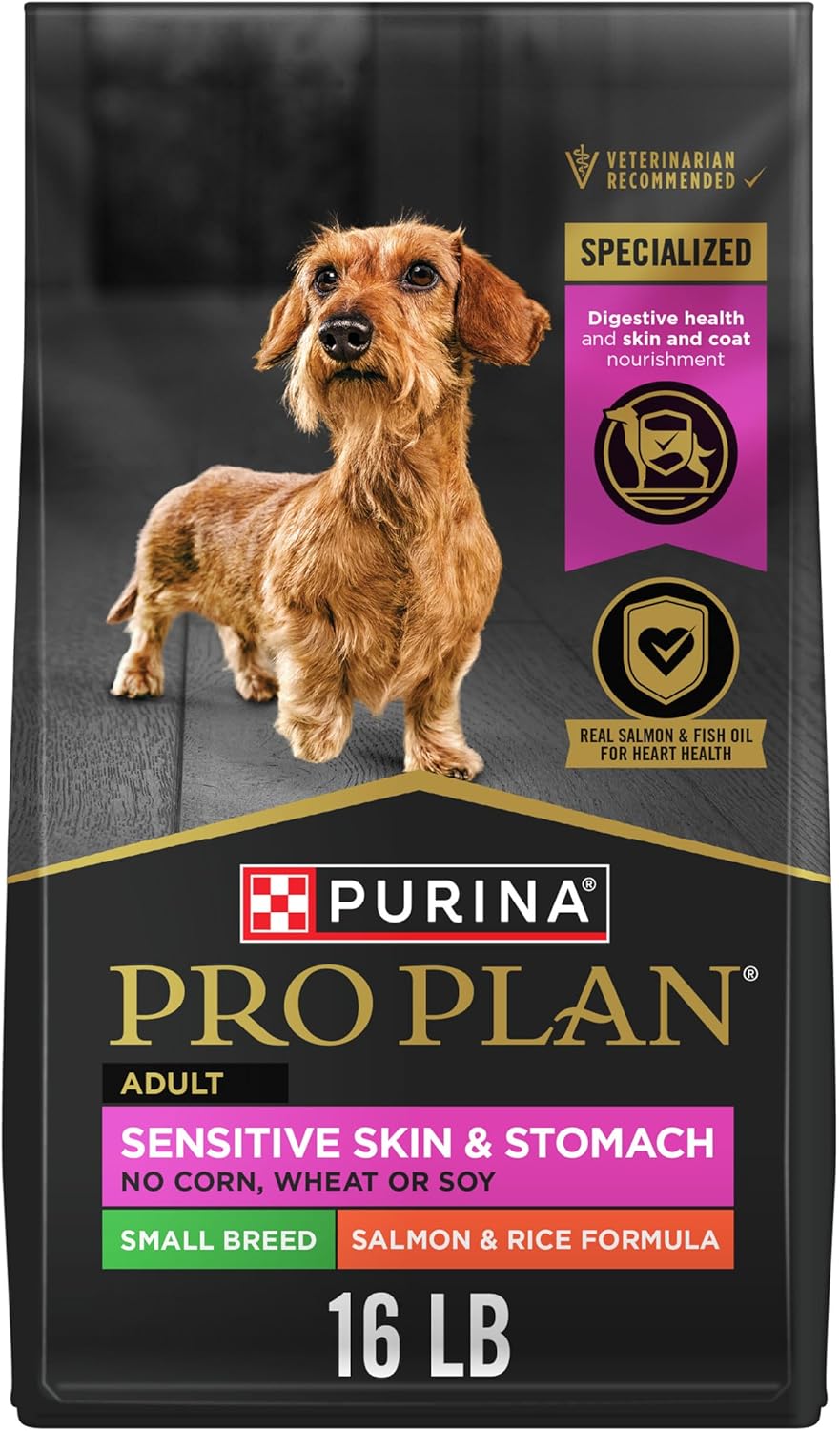
For the Bichon that has reacted to chicken or turkey, this is the salmon-first option.
Purina Pro Plan Sensitive Skin & Stomach Small & Toy Breed uses salmon as the primary protein. For many dogs, salmon is still a novel protein: the immune system has not been sensitized to it the way it has to years of chicken kibble. If you finished an elimination diet and confirmed poultry sensitivity, this is a logical landing spot.
Purina’s Sensitive Skin & Stomach line is widely studied and stays consistent batch to batch. That matters for sensitive dogs, where a surprise formula change can undo weeks of progress.
What does it do for Bichon-specific concerns?
Salmon delivers EPA and DHA in a form the body can use directly. Small-breed kibble size. No corn, no wheat. No artificial dyes.
Here’s the deal:
This is not grain-free. It contains rice and oat meal. For most Bichons with sensitivities, that is fine: rice and oat are among the least reactive grains. If your dog’s elimination diet showed a grain sensitivity specifically, choose Wellness CORE Grain-Free instead.
Honest limitation:
The salmon small-breed bag is not always sitting on every local shelf. Many owners order it so they do not get stuck with a poultry formula as a substitute.
Best for: Bichons with confirmed or suspected poultry sensitivity, or owners who want salmon-based nutrition with a strong research track record.
Skip if: your dog needs a grain-free diet.
The Allergy Problem: Why Bichons Are Picky Eaters
Bichons rank among the top dog breeds for food allergies and environmental sensitivities. Their immune systems tend to be more reactive than average. That shows up as itchy skin, hair loss, hot spots, and a dull or flaking coat.

The most common food triggers:
- Wheat
- Corn and cornmeal
- Soy
- Artificial dyes and preservatives
- Generic protein sources labeled “meat meal” or “poultry by-product”
What can you do?
If your Bichon is scratching constantly, your vet will often suggest an elimination diet: one novel protein your dog has never eaten (duck, venison, rabbit, or salmon are common), plus one simple carbohydrate. Then reintroduce ingredients one at a time. Plan on at least six to eight weeks per ingredient. It is slow, and it is still the most reliable way to find the trigger.
That’s not all.
Even without an active flare, skipping the common triggers from day one is smarter. Wheat, corn, soy, and artificial additives show up in a lot of cheap kibble. Named proteins and cleaner carbs usually do the same job better.
I’m not a veterinarian. If your Bichon already has diagnosed allergies, follow your vet’s protocol. The products here support allergy-prone dogs generally. They are not a substitute for medical management of severe reactions.
Bladder Stones: The Food Connection Most Owners Miss
Here is something a lot of Bichon guides skip, and it matters.
Bichons are genetically predisposed to calcium oxalate bladder stones, one of the two most common urinary stone types in small dogs. PetMD lists bladder stones among the breed’s documented health concerns. Unlike many struvite stones (often infection-related and sometimes dissolvable), calcium oxalate stones usually need surgical removal once formed. Prevention is the better plan.
What’s the food connection?
Two things. First, hydration. Concentrated urine raises stone-forming risk. Dogs on dry kibble alone often drink less than dogs on wet food or moistened kibble. Adding warm water to dry food, mixing in wet food a few times a week, or offering one wet meal a day are simple habits that raise total water intake.
Second, some ingredients are higher in oxalate over time: sweet potato, beet pulp, spinach, and wheat. Some grain-free kibbles lean hard on sweet potato as the carb base. Worth knowing for this breed.
Here’s the deal:
Do not panic about sweet potato in a food your Bichon already tolerates. Do treat ingredient choice as an active conversation if your dog has had stones or your vet has flagged risk. Ask specifically about calcium oxalate.
If you are already managing stone risk, ask your vet about a prescription urinary formula for small dogs. That is a medical diet, separate from the Royal Canin Bichon Frisé Adult bag above.
Tear Staining and What Food Has to Do With It
Every Bichon owner knows the look: rust-brown staining under the eyes on white fur.

That is porphyrin staining from iron-containing compounds in tears (and saliva, which is why some dogs also stain around the mouth and paws). All dogs make porphyrins. Bichons just show them against white coats.
Why does food matter?
At least two food factors make staining worse:
Artificial dyes: Red 40 and caramel coloring show up in many mainstream kibbles and treats. They can deepen staining on light fur. Switching to a dye-free food is one of the first moves experienced Bichon owners try.
Protein triggers: When food sensitivity ramps up tear production, porphyrin staining often follows. Managing allergies through diet can reduce staining as a side effect.
What’s the real story?
Tear staining is multi-factor. Genetics, eye anatomy, water quality, and other health issues all play roles. Food is not a guaranteed fix. Removing artificial dyes and managing allergens is still the logical first step before you spend money on wipes and topicals. All four products on this page skip artificial dyes on purpose.
Frequently Asked Questions
What is the best dog food for a Bichon Frisé with allergies?
Start with a grain-free formula that skips corn, wheat, and soy and uses named proteins. Wellness CORE Grain-Free Original is the first pick for most healthy adults. If poultry is the confirmed trigger, switch to Purina Pro Plan Sensitive Skin & Stomach with salmon. For active flares, work with your vet on an elimination diet before rotating foods again.
What dog food helps with Bichon Frisé tear staining?
No food guarantees stain removal. Genetics and eye anatomy matter too. Dye-free foods without common allergens are the logical first step. All four picks on this page skip artificial dyes. If staining stays after a diet change, ask your vet to rule out eye or ear issues.
Can the wrong food cause bladder stones in Bichons?
Diet alone does not cause every stone, but Bichons are predisposed to calcium oxalate stones. Hydration matters: wet food, water added to kibble, or both help dilute urine. If your vet has flagged stone risk, ask about prescription urinary diets. Do not rely on over-the-counter kibble alone.
Is Royal Canin Bichon Frisé worth the extra cost?
If coat quality, small-breed kibble shape, or digestive consistency has been a recurring issue, many owners find the breed-specific formula worth trying. If your dog is mid-elimination diet for allergies, wait until triggers are identified before locking into a fixed breed formula.
How often should I feed a Bichon Frisé?
Most adult Bichons do well on two meals per day. Puppies may need three or four smaller meals to reduce hypoglycemia risk. Your vet can set portions by weight and activity. Keep treats under 10% of daily calories so the main diet stays balanced.
Related Articles
You might also find these useful:
- What are the 3 Best Low Phosphorus Dry Dog Foods
- These are the 3 Best Dog Foods Without Corn
- What Is Low Residue Dog Food
- The Best High Fiber Dog Foods
Wrap Up: Best Dog Food for Bichon Frisé

Bichons are not complicated dogs. They want to play, cuddle, and look fantastic doing it.
Their food rewards a little extra attention. A diet that skips common allergens, supports skin and coat, and keeps hydration and bladder health in mind shows up in how your Bichon looks and feels over the years ahead.
Dakota’s Bichon friends were lucky to have owners who cared enough to ask the right questions. If you’re reading this, you’re already one of them.
Where to start:
Healthy adult, cleaner label: Wellness CORE Grain-Free.
Digestive sensitivity or stomach upset: Hill’s Sensitive Stomach & Skin Small Breed.
Purpose-built for the breed’s anatomy and coat: Royal Canin Bichon Frisé.
Confirmed poultry sensitivity: Purina Pro Plan Sensitive with salmon.
And if your Bichon has ever had bladder stones, or your vet mentioned urinary health, bring the moisture question to your next appointment. Adding water to kibble is free and it matters.
Have a Great (Frisbee) Day!!
By the DakotaSays Group | Last Updated: July 2026
About this article: Recommendations on Dakota Says come from our experience as dog owners and careful label research, not from veterinary practice. Dakota lived with us for 17 years; this site continues in her memory.
Always check with your veterinarian before changing your dog’s diet, especially for medical conditions.
Sorry, the comment form is closed at this time.