The 3 Best Low Phosphorus Dry Dog Foods – Quick Picks
If you want the short answer first:
- Hill’s Science Diet Adult 7+ Chicken Meal, Barley & Rice: the published-typical-number pick. Hill’s typical analysis for this recipe lists phosphorus at 0.68% on a dry matter basis. Best everyday senior bag on this page when a vet has not prescribed a renal diet.
- Blue Buffalo Life Protection Formula Senior Chicken & Brown Rice: senior recipe, 18% protein minimum, and a printed phosphorus line of 0.6% minimum as fed. Best when you want a no-corn, no-wheat, no-soy senior bag and your vet has not put you on a medical diet.
- Wellness Complete Health Age Advantage Chicken & Barley: senior chicken-and-barley bag with a printed phosphorus line of 0.60% minimum as fed, plus a probiotic guarantee. Best when you want that mineral printed on a moderate-protein barley recipe.
These are over-the-counter foods, not prescription kidney diets. If your vet has already diagnosed chronic kidney disease, ask about a renal formula first. A chitosan phosphate binder such as Epakitin is a supplement, not a fourth kibble.

Why People Search for Low Phosphorus Dog Food
I think you’ll agree with me when I say: once a vet mentions kidneys, the grocery aisle suddenly looks like a chemistry lab.
When Dakota moved into her senior years, phosphorus became a line we started reading on bags. Not because a blog can diagnose kidney disease. Because aging dogs often need a different mineral balance than a high-protein puppy or sport formula, and the label is the only honest place to start.
Here’s the deal:
Below you’ll get a plain-English phosphorus primer, a vet-first warning on symptoms, a label checklist, then reviews of three over-the-counter dry foods.
What Phosphorus Does (and Why Vets Talk About It)

Phosphorus is not a villain.
Growing dogs need it for bone.
The problem is the other end of life.
As kidney function declines, the body has a harder time clearing extra phosphorus. Veterinary nutrition sources used in chronic kidney disease (CKD) care treat phosphorus control as a major goal once disease is staged.
The International Renal Interest Society (IRIS) publishes staging and treatment frameworks vets use worldwide. Today’s Veterinary Practice summarizes the practical diet target many clinicians use for dogs on a renal diet: about 0.2% to 0.5% phosphorus on a dry matter basis, which is far below a typical grocery bag.
Why does this matter on a shopping page?
Because most over-the-counter adult foods are built to meet AAFCO maintenance minimums, not IRIS renal targets. A senior bag can sit lower than a 34% protein grain-free bag and still be the wrong tool after a CKD diagnosis.
That is not a knock on the three foods below. It is the line between a thoughtful senior diet and a medical diet.
Low phosphorus also does not automatically mean low protein.
Some senior formulas moderate minerals while still feeding enough protein to protect muscle. Protein targets belong in a conversation with your vet, especially if bloodwork already exists.
Signs That Belong at the Vet, Not in the Kibble Aisle

The American Kennel Club, citing veterinary input, lists increased thirst and increased urination as the earliest signs owners often notice.
Later signs can include weight loss, a smaller appetite, vomiting, and low energy.
The MSD Veterinary Manual (the owner version of the Merck Veterinary Manual) makes the same point: those signs also show up in other diseases, and many dogs stay quiet until a lot of kidney function is already gone.
I can’t emphasize this enough:
A new bag of food does not diagnose anything. If the water bowl empties faster, accidents start indoors, or your senior dog stops finishing meals, call the clinic. Ask for bloodwork and a urinalysis.
Diet talk comes after numbers, not before.
What to Look for on the Label

A phosphorus number you can actually check. Hill’s publishes a typical nutrient profile for Adult 7+. Many grocery brands only print a phosphorus minimum on the guaranteed analysis. A minimum is a floor, not a cap. It does not prove the food is phosphorus restricted.
AAFCO complete and balanced for adult maintenance or senior, not a puppy growth statement, unless your vet has a special reason.
Named animal protein near the top. Chicken meal, chicken, or lamb is clearer than generic “meat meal.”
A feeding transition, not a cold swap. Hill’s own Adult 7+ page tells owners to mix increasing amounts of the new food over about seven days. Sudden changes are a common way to add stomach upset on top of an already stressful week.
Fresh water, always. Dry food plus a dirty bowl is a bad pair for any senior, kidney conversation or not.
Bottom line?
If your vet wants true phosphorus restriction, ask for a prescription renal diet by name. The three bags below are over-the-counter senior foods with current labels and honest limits.
How We Chose These Three
I am not a veterinarian, just a dog owner who spent seventeen years with Dakota, including the years when senior food and phosphorus showed up on our shopping list.
Manufacturer pages, published nutrient tables, and review history are what I checked for each bag below.
What I required:
- A currently available dry food you can buy without a prescription
- A named protein and a complete-and-balanced statement
- At least 4.0 stars and a thick review history where the listing supports it
- A printed phosphorus figure on the guaranteed analysis or a typical-analysis table
What I will not claim: that an over-the-counter bag treats kidney failure. Prescription renal diets belong with your vet. See How We Choose & Recommend Products.
Side-by-Side: The Three Dry Foods
| Food | Phosphorus note | Best for | Skip if |
|---|---|---|---|
| Hill’s Science Diet Adult 7+ | Typical analysis 0.68% phosphorus, dry matter (confirm on the current Hill’s nutrient tab) | Seniors who need a vet-familiar bag with a published typical number | Your vet already prescribed a renal diet, or you need grain-free |
| Blue Life Protection Senior | Guaranteed analysis lists phosphorus 0.6% minimum, as fed. That is a floor, not a renal target | Seniors that need a no-corn, no-wheat, no-soy chicken-and-rice bag | You need a published typical phosphorus percentage |
| Wellness Complete Health Age Advantage | US listings reprint phosphorus 0.60% minimum, as fed. That is a floor, not a typical analysis | Seniors that do well on chicken and barley with a probiotic line | You need Hill’s typical-analysis printout, or poultry is off the table |
The 3 Best Low Phosphorus Dry Dog Food Products
1. Hill’s Science Diet Adult 7+ Chicken Meal, Barley & Rice
Hill’s Science Diet Adult 7+ is the food I point to first on this page, because Hill’s publishes a typical phosphorus number, not only a guaranteed minimum.

The current retail name is Adult 7+ Chicken Meal, Barley & Rice. Older bags and this site’s redirect still say Active Longevity. Same senior line, updated packaging.
Hill’s official Adult 7+ page positions the recipe for dogs seven and older, not for puppies or pregnant or nursing dogs. The typical nutrient table reprinted from Hill’s analysis lists about 18.7% protein and 0.68% phosphorus on a dry matter basis.
Open the Average Nutrient tab on that Hill’s page and match it to the bag in your hand. Formulas do get tweaked.
Published Phosphorus vs a Renal Diet
What’s the real story?
0.68% dry matter is controlled for a grocery senior food. It is still above the 0.2% to 0.5% dry matter range used in many prescription renal diets.
If your dog already has staged CKD, this bag is a conversation starter with the vet, not a substitute for Hill’s Prescription Diet k/d or another renal formula they trust.
The brand history is real and worth knowing. Dr. Mark Morris created a homemade diet in the 1930s for Buddy, the guide dog of Morris Frank. That work became Hill’s. Clinics still stock Science Diet, which helps when you run out on a Tuesday.
Honest limitation:
This recipe includes barley, brewers rice, wheat, corn, sorghum, and soybean meal. It is not grain-free and it is not a boutique “limited ingredient” story. Chicken meal leads. If poultry is a known trigger, skip it.
Best for: healthy or early-senior dogs whose vet wants a familiar Adult 7+ bag with a published phosphorus figure.
Skip if: your vet prescribed a renal diet, your dog cannot eat poultry, or you need a grain-free formula.
2. Blue Buffalo Life Protection Formula Senior Chicken & Brown Rice
Blue Buffalo Life Protection Senior is the senior chicken-and-rice bag for owners who want a printed phosphorus line and a formula labeled for dogs seven and older. It is not a kidney diet.

Blue’s official Senior chicken and brown rice page starts with deboned chicken, then brown rice, barley, and oatmeal. Current listings reprint the guaranteed analysis as 18% protein minimum, 0.7% calcium minimum, and 0.6% phosphorus minimum, as fed (10% moisture max).
What the 0.6% Minimum Actually Means
Read that last number the honest way.
A minimum means Blue promises at least 0.6%. It does not promise the food stays near 0.6%.
Converted to dry matter, a 0.6% as-fed floor at 10% moisture is about 0.67% minimum. Typical content can sit higher.
If your vet wants a typical number, Hill’s Adult 7+ is still the cleaner printout.
Why this bag?
Because the recipe is built for senior dogs, prints phosphorus on the label, and skips corn, wheat, and soy.
LifeSource Bits are Blue’s cold-formed vitamin and antioxidant kibbles.
Official bag sizes run from a 5 lb trial bag up through a 40 lb pantry bag.
Honest limitation:
Peas, pea starch, pea fiber, and pea protein show up after the grains. If your vet has you avoiding legumes, read the full list. Chicken leads, so poultry-sensitive dogs need a different protein. And 0.6% minimum is not a renal diet. Ask about a prescription formula if CKD is already staged.
Best for: senior dogs whose vet is comfortable with an over-the-counter chicken-and-rice senior bag that prints a phosphorus minimum.
Skip if: you need a published typical phosphorus percentage, poultry is off the table, or your vet already prescribed a renal diet.
3. Wellness Complete Health Age Advantage Chicken & Barley
Wellness Complete Health Age Advantage is the chicken-and-barley senior bag when you want a printed phosphorus minimum plus a probiotic line on moderate protein.
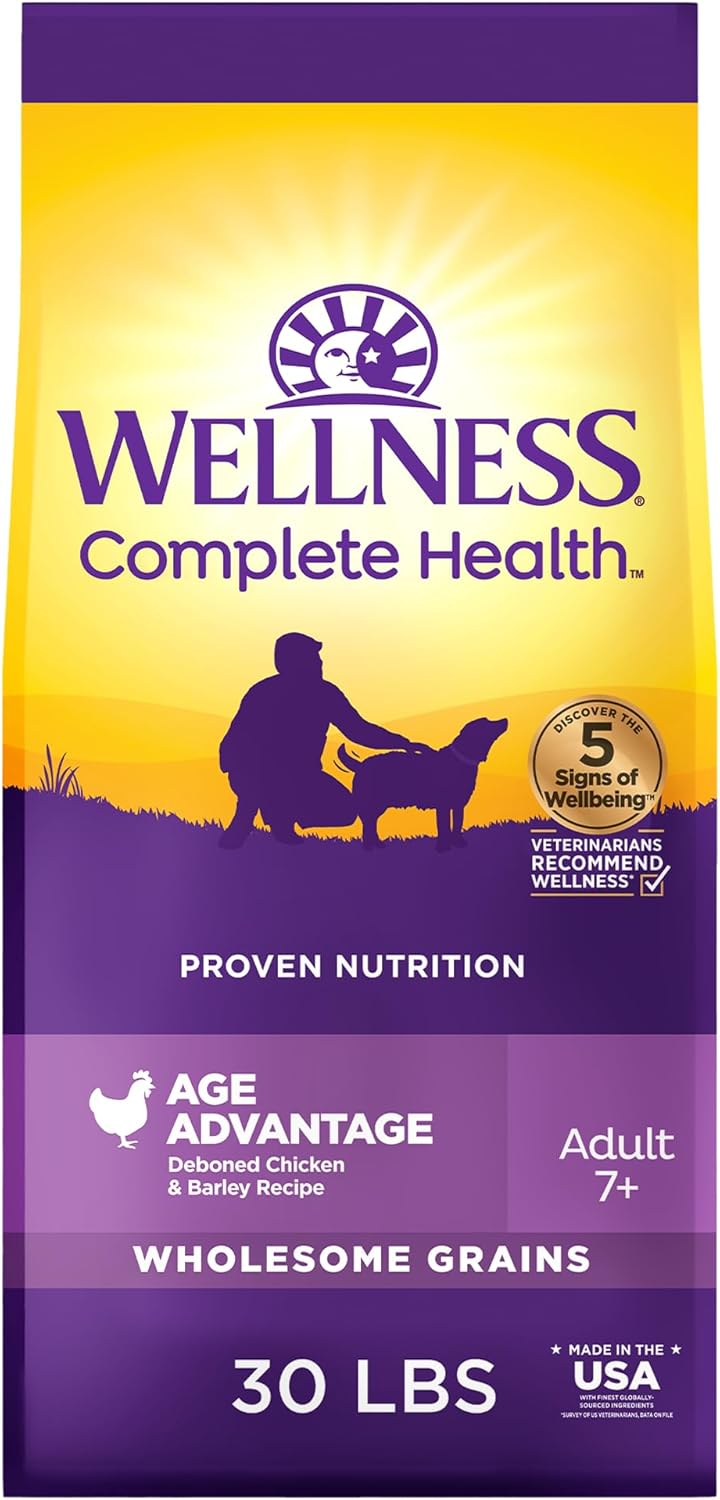
Wellness’s official Age Advantage chicken and barley page positions the recipe for dogs seven and older.
Current U.S. listings reprint the guaranteed analysis as 22% protein minimum and 0.60% phosphorus minimum, as fed (10% moisture max).
Open the bag and match those lines. Formulas do get tweaked.
Printed Phosphorus vs Hill’s Typical Number
Here’s the deal:
0.60% minimum is a floor, the same honesty test as Blue Senior. It is not the same thing as Hill’s 0.68% typical dry-matter figure.
Use it as a label you can check, not as a DIY renal target.
Deboned chicken and chicken meal lead. Barley and other grains follow. Wellness prints glucosamine and chondroitin, plus a live microorganism guarantee. The line skips corn, wheat, and soy.
A 30 lb pantry bag is widely sold. Smaller bags exist if you want a shorter trial.
Honest limitation:
Peas show up on current ingredient lists. Confirm the bag in your cart, including the recipe name.
Grab Complete Health Age Advantage, not Wellness CORE Age Advantage. CORE is a higher-protein grain-free senior line.
Chicken-first formulas fail poultry-sensitive dogs.
And a 0.60% minimum is still not a prescription kidney diet.
Best for: seniors that do well on chicken and barley when you want a printed phosphorus minimum and a probiotic line.
Skip if: you need a typical-analysis printout, poultry is off the table, or the clinic already named a renal diet.
A phosphate binder, not a fourth kibble: Epakitin
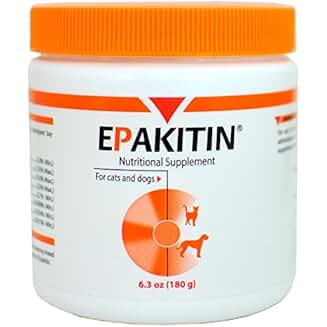
Epakitin is a chitosan phosphate binder, not dry dog food. Vets sometimes add a binder after diet is already in the plan.
Vetoquinol describes Epakitin as a chitosan-based phosphate binder for dogs and cats.
Active ingredients on the brand page are calcium carbonate and chitosan.
The powder is meant to be mixed into food so it can bind dietary phosphorus in the gut.
Vetoquinol says it can be used with a normal diet or alongside a renal diet. Dose belongs on the label and in your vet’s plan.
You might be wondering:
Can a powder replace a renal diet?
No.
IRIS-style care treats diet as the first lever and binders as an add-on when serum phosphorus stays high.
Some vets also pair a binder with a probiotic such as Azodyl. That pairing is a clinic decision. Internet testimonials about “days to live” are not evidence, and I will not repeat them as if they were.
Honest limitation:
Chitosan comes from shellfish. Ask your vet if your dog has a known shellfish issue.
The powder sticks better on wet food or moistened kibble than on bone-dry bits. Do not start a binder because a blog listed it next to kibble.
Best for: dogs whose veterinarian already asked for a phosphate binder and named this product.
Skip if: you do not have a diagnosis, or you have not asked the clinic about binders at all.
Frequently Asked Questions
Is low phosphorus dog food the same as a kidney diet?
No. A grocery senior food can be lower in phosphorus than a high-protein sport bag and still sit well above prescription renal targets.
If CKD is diagnosed, ask your vet for a renal diet by name.
The three foods above are over-the-counter options for label shoppers, not a treatment plan.
Can I put my senior dog on low phosphorus food just in case?
Not as a guess. Growing dogs need phosphorus for bone.
Even seniors can be hurt by the wrong restriction if the real problem is something else.
Ask for senior bloodwork first. If the numbers are normal, a quality adult or 7+ maintenance food is often enough.
What phosphorus percentage should I look for?
Use the number your veterinarian gives you for your dog’s stage.
Many renal diets for dogs land around 0.2% to 0.5% phosphorus on a dry matter basis, per veterinary nutrition summaries such as Today’s Veterinary Practice.
Hill’s Adult 7+ typical analysis of 0.68% dry matter is useful context for an OTC senior bag. It is not a DIY renal target.
Should puppies eat low phosphorus food?
No, unless a veterinarian has a specific medical reason.
Puppy formulas are built for growth. Adult 7+ and similar senior bags are labeled not recommended for puppies on Hill’s own product page.
Does Epakitin replace a low phosphorus diet?
Vetoquinol presents it as a binder you can use with food, including renal diets.
Your vet decides if diet, binder, or both belong in the plan. Do not dose from a review site.
Related Articles
You might also find these useful:
- Best Low Protein Dog Food
- Best Dog Food Brand for Senior Dogs
- What Is Low Residue Dog Food
- How We Choose & Recommend Products
Wrap Up: Low Phosphorus Dry Dog Food
Phosphorus shopping is really vet shopping with a better label habit.
Where to start:
Need a published number on an OTC senior bag: Hill’s Science Diet Adult 7+.
Need a no-corn senior chicken-and-rice bag with a printed phosphorus minimum: Blue Life Protection Senior.
Want chicken and barley, a probiotic line, and a printed phosphorus minimum: Wellness Complete Health Age Advantage.
Already in the clinic’s CKD plan: ask about a prescription renal diet, and only add Epakitin if your vet named it.
Dakota never pretended to be a lab tech. She just needed us to read the bag and call the person with the bloodwork machine. That’s still the job.
Have a Great Frisbee Day!!
By the DakotaSay group | Last Updated: September 2026
About this article: Recommendations on Dakota Says come from our experience as dog owners and careful label research, not from veterinary practice. Dakota lived with us for 17 years; this site continues in her memory. How we choose products · About Dakota
Always check with your veterinarian before changing your dog’s diet, especially for kidney disease or any other medical condition. I am not a veterinarian.
2 Responses to “3 of the Best Low Phosphorus Dry Dog Food Products”
Sorry, the comment form is closed at this time.
J smith,
Solid gold includes Almond Oil, not actual almonds. My research shows that Almond Oil provides skin benefits and it’s actually not the oil that can cause pancreatitis, but whole almonds that are risky. I’ve updated the article with references and added a warning. Thank you for your feedback!
I got this site from my friend who informed me about this web page and now this time I am browsing this
web site and reading very informative articles or reviews at this place.